


The Best Data Enrichment Tools for 2026
In the modern sales and marketing landscape, accurate data is your most valuable asset. With B2B data decaying at a rate of roughly 30% per year, “stale” records lead to bounced emails, missed quotas, and wasted ad spend.
Data enrichment tools solve this by automatically updating your CRM with real-time information, such as job changes, verified emails, direct dials, and technographics.
Inspired by current market leaders, we’ve compared the top 9 data enrichment providers to help you choose the right fit for your tech stack.
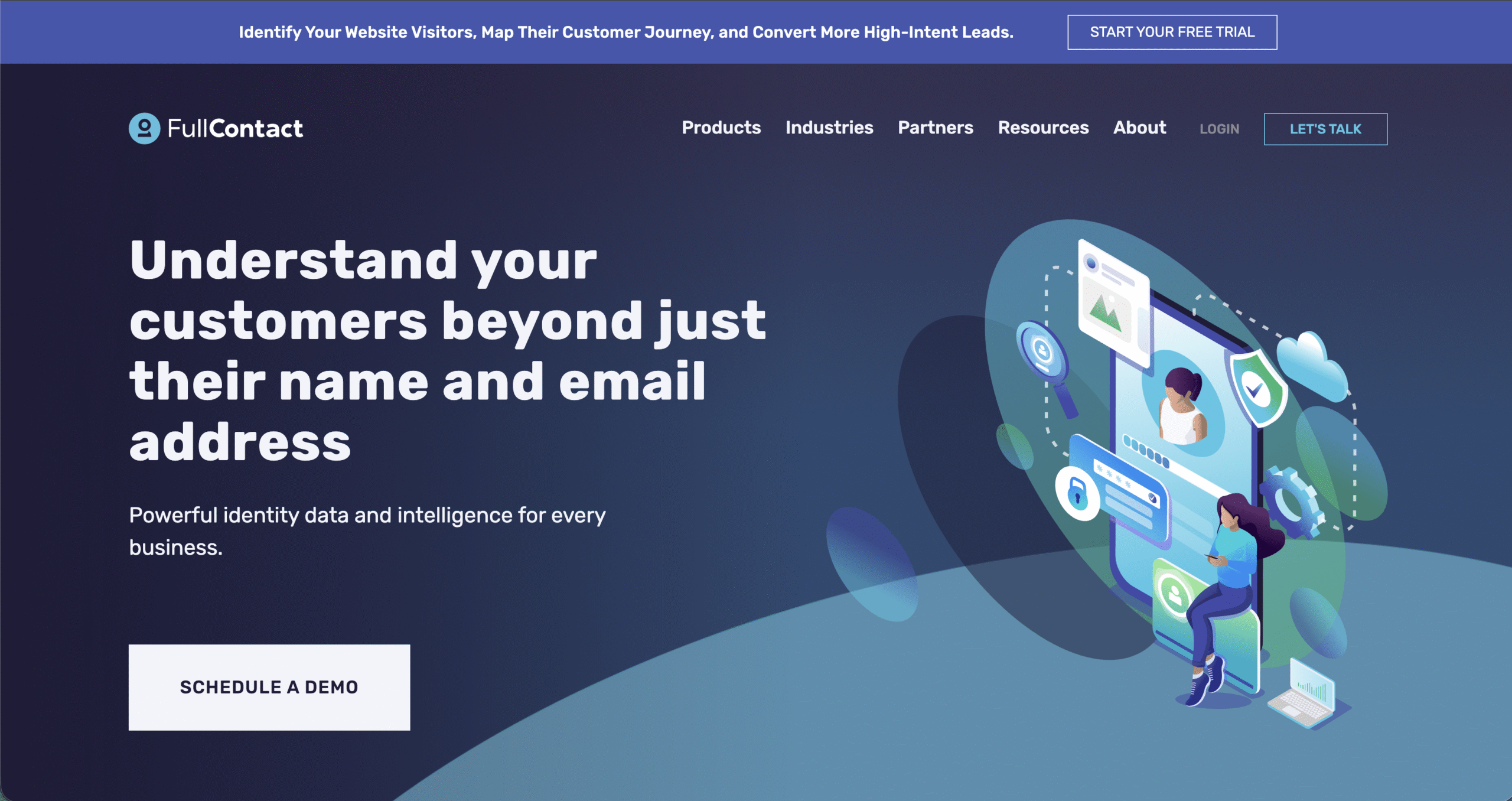
1. FullContact
Best for: Person-Centric Customer Intelligence
FullContact is a leader in identity resolution. Unlike tools that simply provide a list of names, FullContact specializes in “stitching” together fragmented data points into a cohesive person-first profile. They utilize a proprietary Identity Graph to connect disparate identifiers like emails and phone numbers to a single, persistent ID without the need for complex workflow logic.
-
- Key Features: Real-time API enrichment, person-to-person mapping, and robust privacy/consent management.
- Pros: 900+ person-level attributes, including core segmentation, demographic and individual insights that are vital for personalized B2C marketing. FullContact is built for modern digital channels, returning mobile IDs and hashed emails that can port into any advertising channel.
- Cons: More focused on identity than pure outbound “lead list” generation.
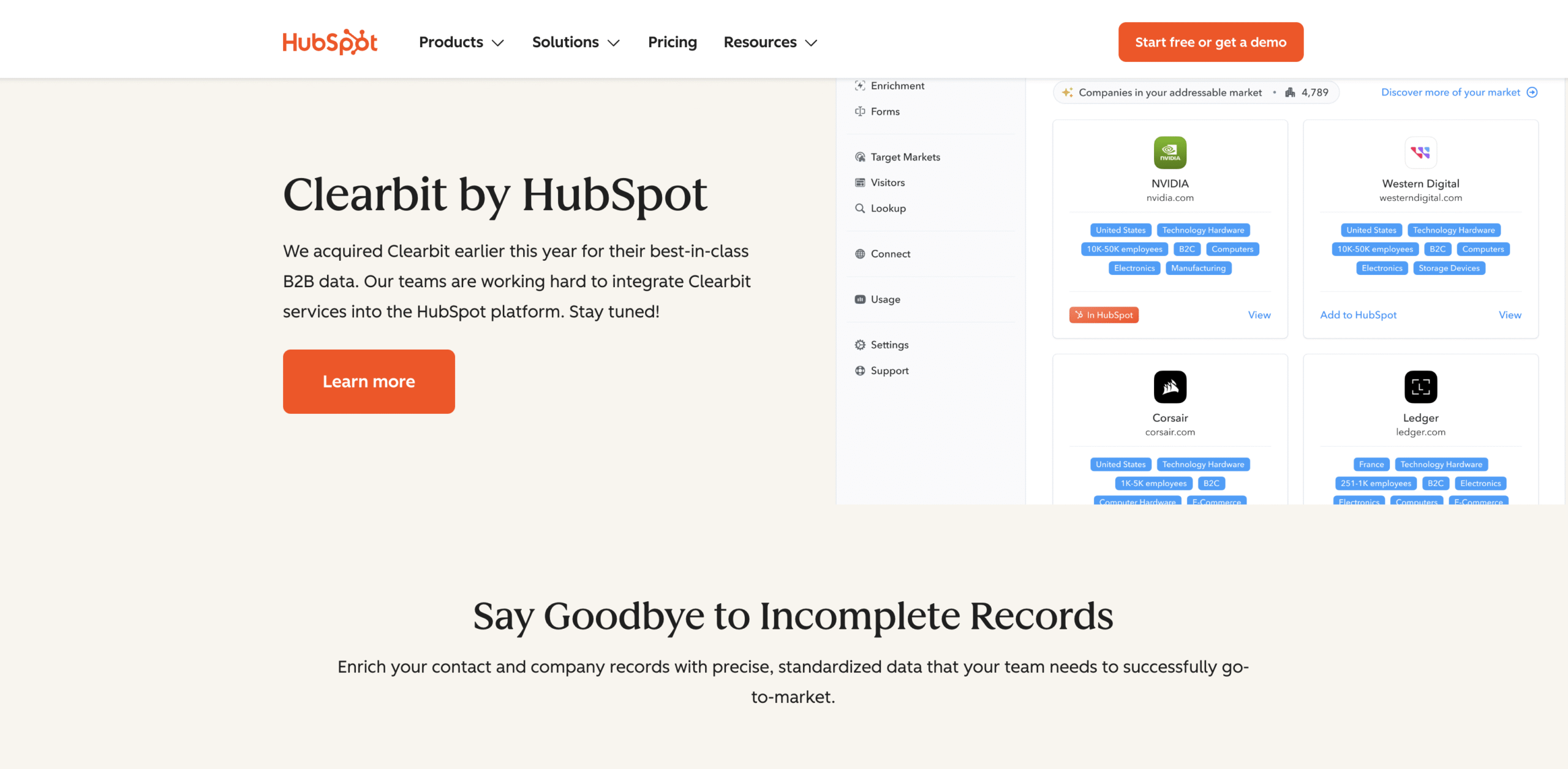
2. Clearbit (by HubSpot)
Best for: Real-time B2B Marketing Intelligence
Recently acquired by HubSpot, Clearbit is a powerhouse for B2B marketers. It excels at “de-anonymizing” website traffic and enriching leads the moment they enter your ecosystem. Its “Reveal” feature allows you to see which companies are visiting your site even if they don’t fill out a form.
-
- Key Features: Weekly data refreshes, IP-to-company mapping, and seamless HubSpot integration.
- Pros: Highly accurate company attributes (technographics, employee count, funding).
- Cons: Can be expensive for smaller startups; deep integration is focused primarily on the HubSpot/Salesforce ecosystem.
3. Data Axle
Best for: Large-scale Enterprise Consumer and Business Data
Data Axle (formerly Infogroup) is one of the “original” data giants. They maintain one of the most comprehensive databases of both B2B and B2C information in North America. Their strength lies in their rigorous verification process, which includes millions of manual phone calls per year to verify records.
-
- Key Features: Real-time APIs, massive historical database, and human-verified records.
- Pros: Excellent for both B2B and B2C; highly reliable for traditional direct mail and digital cross-channel campaigns.
- Cons: The interface can feel a bit “legacy” compared to modern SaaS tools.
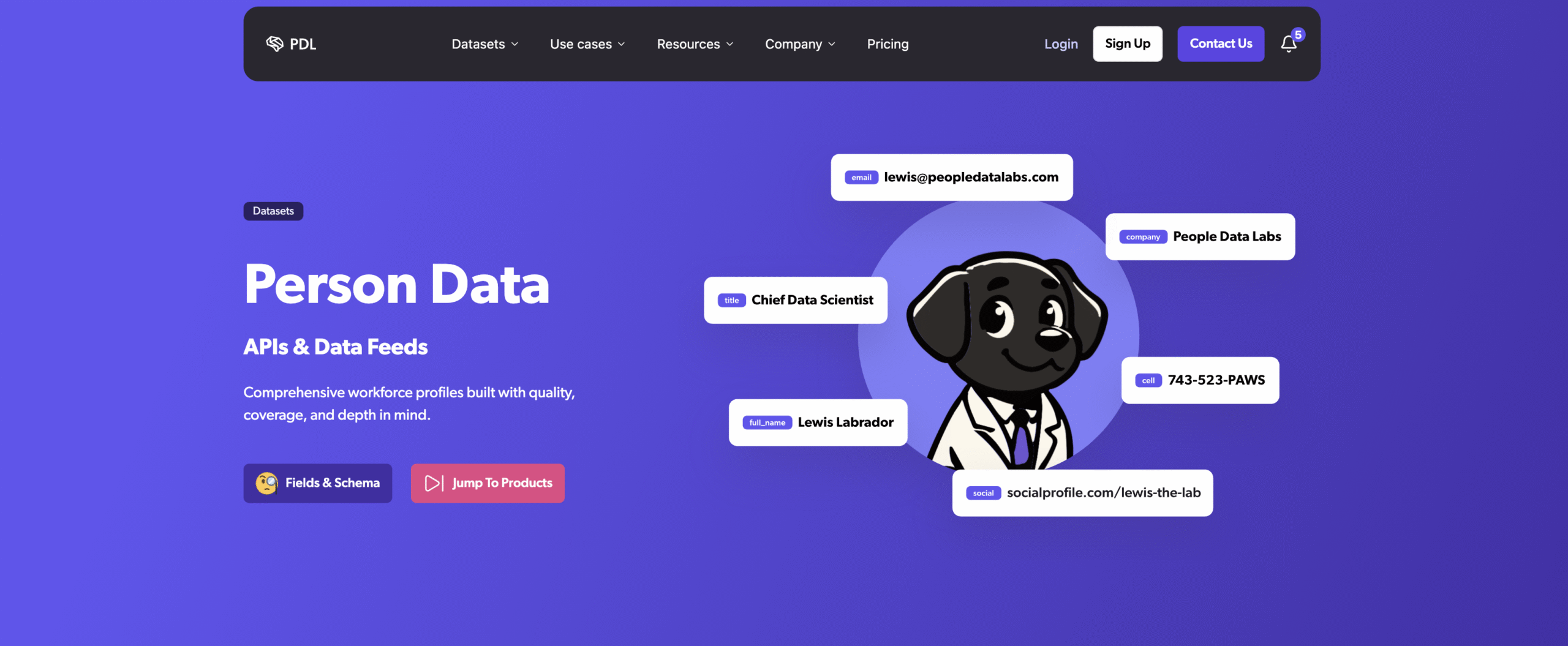
4. People Data Labs
Best for: Developers and Data-as-a-Service (DaaS)
People Data Labs is a “data-first” company. They don’t provide a flashy sales platform; instead, they provide a massive, high-quality API for developers to build their own tools. PDL is the engine behind many other famous sales platforms.
-
- Key Features: Over 3 billion professional profiles, resume-style data, and advanced work history.
- Pros: Unmatched scale and data depth; extremely flexible API for technical teams.
- Cons: Requires technical knowledge to implement; no “out-of-the-box” UI for non-technical sales reps.
5. Acxiom
Best for: Global Enterprise CRM Enrichment and Audience Targeting
Acxiom is an enterprise-level data giant. They focus heavily on consumer insights, making them a top choice for large brands looking to enrich their CRM for better segmentation and personalized advertising.
-
- Key Features: Ethical data sourcing, global reach, and deep demographic/psychographic insights.
- Pros: Massive global footprint; highly sophisticated modeling for predictive analytics.
- Cons: Generally too complex and expensive for small-to-mid-sized B2B companies.
6. Apollo.io
Best for: All-in-One Sales Engagement and Affordability
Apollo.io has disrupted the market by combining a massive B2B database with a built-in sales engagement platform (sequences, dialer, etc.). It is arguably the most “feature-rich” tool for the price point, making it a favorite for SMBs and scaling startups.
-
- Key Features: Chrome extension for LinkedIn, automated sequences, and “Lookalike” lead searching.
- Pros: Very affordable; massive database; integrates prospecting and outreach in one tab.
- Cons: Email accuracy can occasionally lag behind premium “verified-only” providers like ZoomInfo.
7. ZoomInfo
Best for: Maximum Accuracy and Sales Intelligence
ZoomInfo is the undisputed heavyweight of B2B data. Their platform offers deep “intent” data (knowing which companies are searching for your solution) and highly accurate direct-dial phone numbers.
-
- Key Features: Scoops (internal company news), intent data, and organizational charts.
- Pros: The highest accuracy rate for mobile numbers and direct dials in the B2B space.
- Cons: Enterprise pricing; often requires multi-year contracts.
8. Clay
Best for: Data Orchestration and “Waterfall” Enrichment
Clay is a relatively new player that has taken the industry by storm. Rather than being just a data provider, Clay is a “data orchestrator.” It allows you to use 50+ different data sources (including many on this list) in a “waterfall” logic: if Source A doesn’t have the email, check Source B, then Source C.
-
- Key Features: Waterfall enrichment, AI-powered messaging, and integrations with almost every major data provider.
- Pros: Highly customizable; ensures the highest possible “fill rate” for data.
- Cons: Steeper learning curve than a standard “search and export” tool.
9. Adapt.io
Best for: Ease of Use and Lead Prospecting
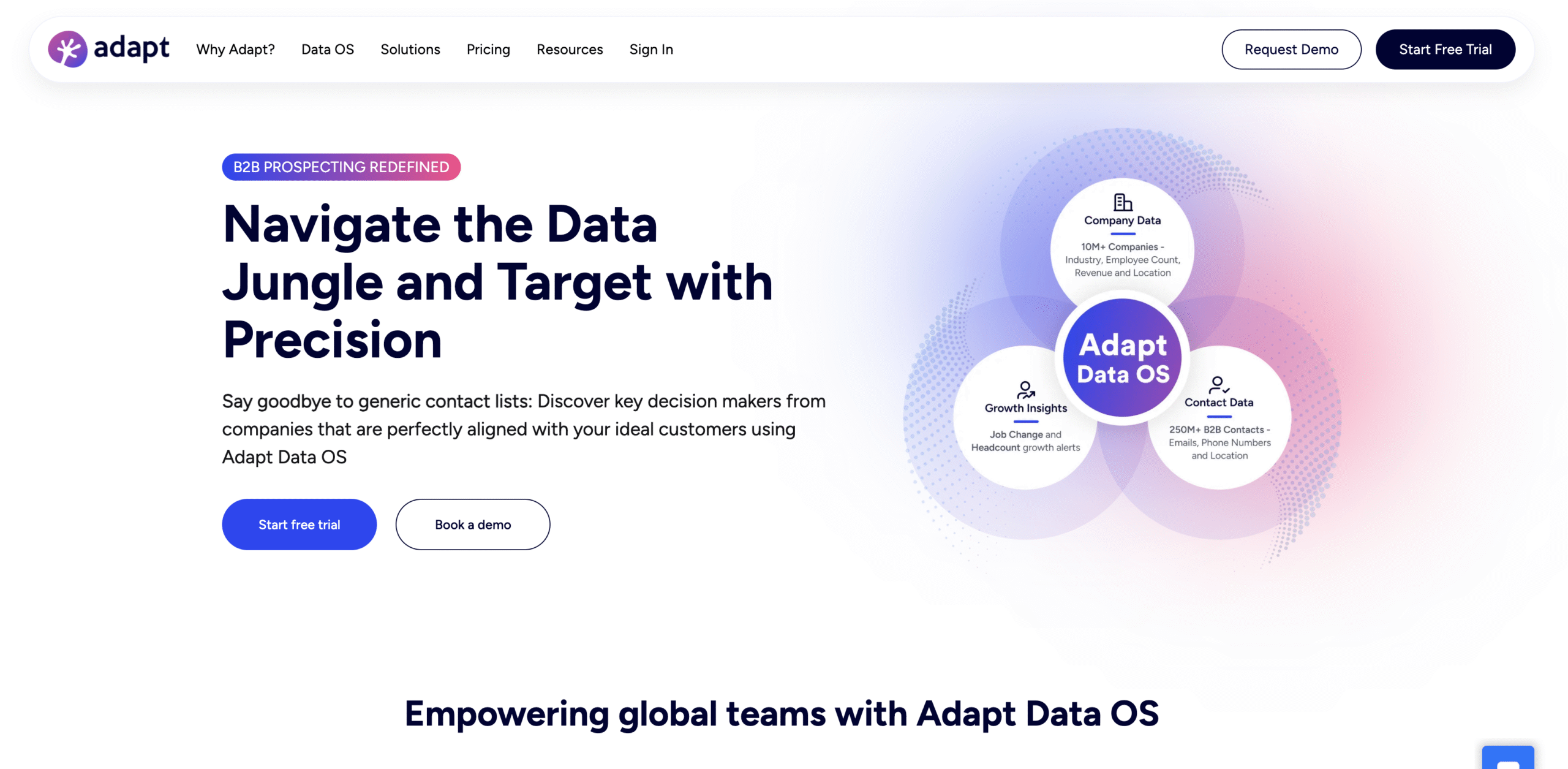
Adapt provides a straightforward, easy-to-use suite for sales teams. It is particularly well-known for its LeadBuilder and its Chrome extension, which works seamlessly over LinkedIn and company websites to provide contact details instantly.
-
- Key Features: High-quality B2B database, easy CRM integrations, and a robust free trial.
- Pros: User-friendly; great for individual sales reps who need to find contacts on the fly.
- Cons: Smaller overall database size compared to giants like ZoomInfo or Data Axle.
Conclusion and Recommendations
Choosing the right tool depends on whether you are trying to find new people or understand your existing customers better.
-
- FullContact is best if you have large, messy customer data and need to resolve duplicate identities with missing demographic/professional attributes.
- If you are a developer building a product, use People Data Labs.
- If you want to find B2B leads at scale, invest in ZoomInfo.
Recent Blogs
-
 February 26, 2026 How AI Data Quality Issues Derail Intelligent Agents (and How to Fix Them) AI, Miscellaneous
 -
February 24, 2026 The Role of Identity Resolution in Building an AI Data Foundation AI, Miscellaneous
-
 February 10, 2026 The Connection Between Data Readiness and AI Agent Accuracy AI, Data Management