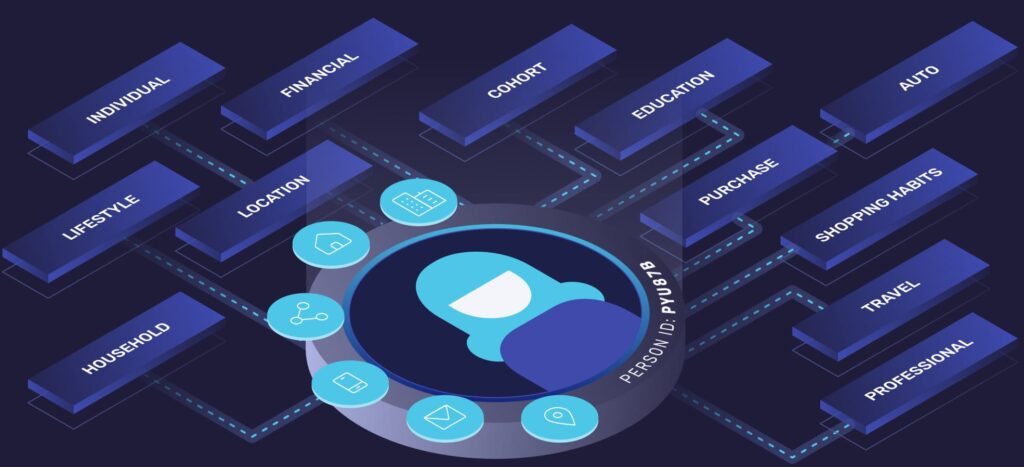
Building a PII management framework from scratch starts with identifying what personal data your organization collects, establishing clear policies for how it is handled, and putting technical and organizational controls in place to protect it. The process requires cross-functional input from legal, IT, marketing, and compliance teams. The sections below break down the most common questions organizations ask when getting started.
What types of data count as PII?
Personally identifiable information, or PII, is any data that can be used on its own or in combination with other information to identify, locate, or contact a specific individual. This includes obvious identifiers like full names, email addresses, phone numbers, and government ID numbers, as well as less obvious ones like IP addresses, device identifiers, and behavioral data that can be linked back to a person.
PII is often split into two categories. Direct PII identifies someone immediately on its own, such as a Social Security number or passport number. Indirect PII requires combination with other data points to become identifying, such as a ZIP code paired with a birth date and job title. Both categories carry compliance obligations under regulations like GDPR and CCPA, so neither should be treated as low-risk by default.
It is also worth noting that sensitivity varies. Financial account details, health information, and biometric data are considered sensitive PII and typically require stricter handling standards than a business email address.
What are the core components of a PII management framework?
A PII management framework is a structured set of policies, processes, and controls that govern how personal data is collected, stored, used, shared, and deleted across an organization. The core components work together to reduce risk, support regulatory compliance, and build customer trust.
Most mature frameworks include the following building blocks:
- Data classification: Categorizing data by type and sensitivity so appropriate controls can be applied
- Access controls: Limiting who can view or process PII based on role and business need
- Retention and deletion policies: Defining how long data is kept and how it is securely disposed of
- Incident response procedures: Establishing clear steps for detecting, reporting, and containing data breaches
Beyond these pillars, a strong framework also includes staff training, privacy impact assessments for new projects, and a governance structure that assigns clear accountability for PII decisions across the business.
How do you conduct a PII data inventory from scratch?
A PII data inventory is a systematic record of every type of personal data your organization collects, where it is stored, how it flows through your systems, and who has access to it. Starting from scratch means mapping your data landscape before you can govern it effectively.
A practical approach follows a few key phases. First, identify all data sources by interviewing department leads and reviewing systems such as CRMs, marketing platforms, HR tools, and third-party vendors. Next, document what PII each source contains, the legal basis for collecting it, and where it is stored or transferred. Finally, assign ownership to each data category so there is always a responsible party when questions or incidents arise.
The inventory is not a one-time exercise. It should be reviewed whenever new tools are introduced, business processes change, or regulations are updated. Treating it as a living document keeps your framework grounded in reality rather than assumption.
How FullContact helps with PII management
We built our identity resolution platform with privacy at its core, which makes it a natural fit for organizations working to strengthen their PII management practices. Rather than creating fragmented data silos that complicate compliance, our Resolve platform consolidates identity graph signals into unified, privacy-safe customer profiles. Here is how we support your efforts:
- Real-time identity resolution that links identifiers without exposing raw PII across systems
- Privacy-safe data enrichment that appends insights to customer records while keeping your data within your own environment
- Authenticated and anonymous identity matching that reduces the need to store excess personal data
If you are building or refining a PII management framework and want to understand how identity resolution fits into your compliance strategy, contact us and we will walk you through how we can help.