Brands can personalize experiences without misusing personally identifiable information by replacing raw data storage with privacy-safe identity resolution techniques that work with tokenized, hashed, or aggregated signals rather than exposed personal details. The key is building personalization on what a customer means to your brand, not on retaining sensitive records that create compliance risk and erode trust. The sections below unpack what responsible PII handling looks like in practice, how to personalize without storing raw data, and how first-party and third-party data differ in this context.
What does responsible use of PII in personalization actually look like?
Responsible use of personally identifiable information in personalization means collecting only the data needed for a specific purpose, being transparent with customers about how it is used, and ensuring that every downstream process handles that data in a way the customer would reasonably expect. It is not about avoiding personalization altogether: it is about building personalization on a foundation of consent, proportionality, and technical safeguards.
In practical terms, responsible PII handling in personalization involves several connected principles. First, data minimization: brands should collect the minimum identifiers required to deliver a relevant experience, rather than hoarding every available signal. Second, purpose limitation: information collected for one reason, such as completing a purchase, should not silently migrate into unrelated targeting systems. Third, meaningful consent: customers should understand what they are agreeing to, not just click through a terms page they will never read.
Beyond policy, responsible use requires technical controls. Storing raw PII, such as plain-text email addresses or phone numbers, in marketing systems introduces unnecessary risk. Modern identity resolution approaches replace raw identifiers with persistent, anonymized tokens that allow brands to recognize returning customers and personalize their experience without ever exposing the underlying personal data to ad platforms, analytics tools, or third parties.
Transparency is equally important. Brands that communicate clearly about personalization, offer genuine opt-out mechanisms, and honor those choices consistently build the kind of trust that makes personalization welcome rather than intrusive. Customers are generally willing to share data when they believe it will be used to improve their experience, not sold or misused.
How can brands personalize experiences without storing raw PII?
Brands can personalize without storing raw personally identifiable information by using identity resolution techniques that convert sensitive identifiers into privacy-safe tokens or hashed values before they enter any downstream system. The personalization logic operates on these anonymized representations, so the brand can recognize a returning customer and tailor their experience without ever holding an exposed email address, phone number, or government identifier in a marketing database.
Hashing and tokenization as the first line of protection
When a customer authenticates, their email address or phone number is immediately hashed using a one-way cryptographic function. The resulting hash acts as a stable, consistent identifier that can be matched across sessions and devices without the original value being recoverable. Tokenization goes a step further by replacing the identifier with a surrogate value managed by a trusted identity system, so even the hash never travels outside a controlled environment.
These approaches allow brands to stitch together a coherent customer journey across touchpoints, because the same person produces the same token regardless of which channel they use, while keeping the underlying PII out of reach of any system that does not strictly need it.
Using an identity graph to personalize at scale
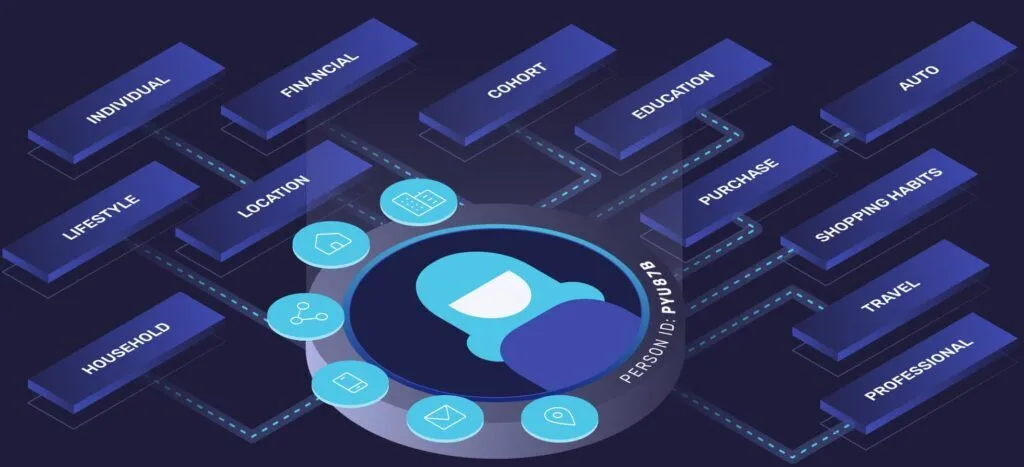
An Identity Graph connects multiple anonymized identifiers, such as device IDs, hashed emails, and cookie values, into a single unified profile without requiring brands to store the raw personal data themselves. The graph resolves identity in real time, so when a known customer arrives on a new device or channel, the brand can immediately serve a personalized experience based on their full history, preferences, and context.
This is the architecture that separates modern, privacy-safe personalization from older approaches that relied on large, centralized databases of raw customer records. The personalization outcome is the same or better, but the risk profile is fundamentally different because the sensitive data never needs to live inside the brand’s own systems in an exposed form.
Contextual and behavioral signals as a complement
Brands can also reduce their dependence on stored PII by leaning into contextual personalization, which uses signals available in the current session rather than historical records tied to an individual. Browsing category, device type, time of day, and on-site behavior can all inform a relevant experience without requiring any persistent identifier at all. When combined with privacy-safe identity resolution for authenticated users, contextual signals extend personalization reach to anonymous visitors without creating new PII obligations.
What is the difference between first-party data and third-party data for personalization?
First-party data is information a brand collects directly from its own customers through owned channels, such as purchases, account registrations, email interactions, or on-site behavior. Third-party data is information purchased or licensed from external providers who aggregated it from sources the brand has no direct relationship with. For personalization, the distinction matters because first-party data carries explicit consent and high accuracy, while third-party data introduces questions about provenance, freshness, and regulatory compliance.
Why first-party data is the stronger foundation
First-party personally identifiable information is collected with the customer’s knowledge, often in exchange for a service or benefit. Because the brand owns the relationship, it also owns the consent record. This makes first-party data far more defensible under privacy regulations such as GDPR and CCPA, and it tends to be more accurate because it reflects real behavior within the brand’s own ecosystem rather than inferred or modeled attributes.
Personalization built on first-party data also tends to perform better. A recommendation based on what someone actually bought from you last month is more relevant than one based on a behavioral segment assembled by a data broker from dozens of disparate sources.
The role of third-party data and its limitations
Third-party data has historically been used to extend personalization reach beyond a brand’s own customer base, filling gaps in audience coverage and enriching thin customer profiles. However, its limitations are significant:
- Consent chains are often opaque, making compliance verification difficult
- Data freshness varies widely, and stale records produce poor personalization outcomes
- The same segments are available to competitors, reducing differentiation
- Browser and platform changes have eroded the technical infrastructure that third-party data relied on
This does not mean external data has no role. Enrichment from reputable providers, applied to first-party records with clear purpose limitation, can add genuine value. The difference is that enrichment should augment a first-party foundation rather than substitute for one. Brands that treat third-party data as a shortcut to personalization without investing in direct customer relationships find themselves increasingly exposed as privacy regulations tighten and data availability narrows.
The practical direction for most brands in 2026 is to treat first-party data as the core asset, use privacy-safe identity resolution to make that data work harder across channels and devices, and apply external enrichment selectively where it genuinely improves the customer experience rather than simply expanding surveillance reach.
How FullContact helps brands personalize without compromising PII
We built our platform specifically to solve the tension between meaningful personalization and responsible data handling. Rather than asking brands to choose between knowing their customers and protecting them, we provide the infrastructure to do both at once. Here is how we make that possible in practice:
- Real-time identity resolution that matches hashed or tokenized identifiers across devices and channels in under 150 milliseconds, so brands can recognize returning customers without storing raw PII in their own systems
- First-party data enrichment that appends more than 900 personal and professional insights to existing customer records, deepening personalization capability without requiring brands to collect more sensitive data directly
- Privacy-safe architecture that keeps your customer data yours: we never share or commingle your records with other clients’ data, and our identity graph operates without exposing underlying PII to downstream systems
Whether you are trying to unify fragmented customer profiles, extend personalization to anonymous visitors, or reduce your compliance exposure while improving campaign performance, we have the tools to help. If you want to explore what privacy-safe personalization could look like for your brand, contact us and we will walk you through it.