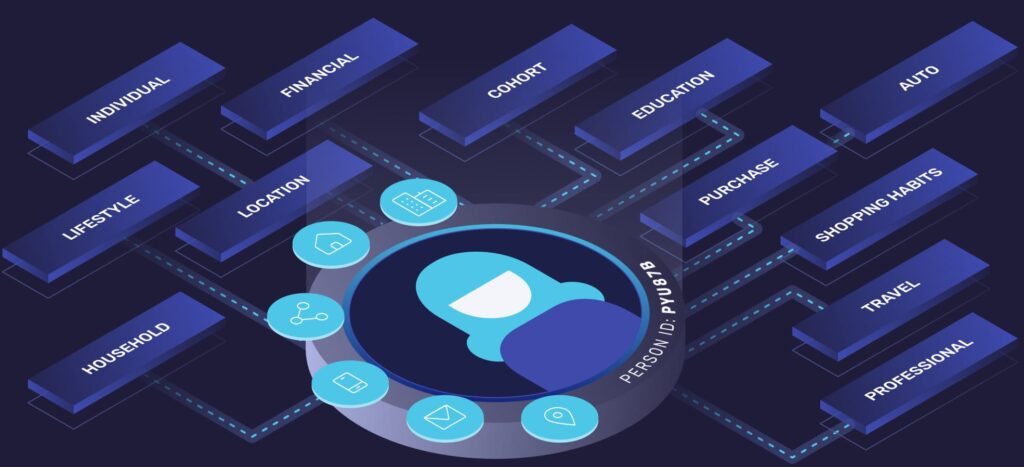
PII management and data governance are related but distinct disciplines. PII management focuses specifically on how personally identifiable information is collected, stored, accessed, and protected. Data governance is the broader framework that sets the policies, standards, and accountability structures for all organizational data, including but not limited to PII. Together, they form the foundation of a responsible data strategy.
Understanding where each begins and ends helps organizations avoid compliance gaps and build stronger trust with their customers. The sections below break down what each discipline covers and how they work in practice.
How do PII management and data governance work together?
PII management operates within the structure that data governance creates. Data governance sets the rules, assigns ownership, and defines how data should be handled across the organization. PII management applies those rules specifically to personal data, ensuring that sensitive identifiers are treated with the care that privacy regulations require.
Think of data governance as the policy layer and PII management as the operational layer. A data governance framework might define who is allowed to access customer records and under what conditions. PII management then ensures that when those records contain names, email addresses, or device identifiers, the appropriate protections are in place at every touchpoint. Without governance, PII management lacks direction. Without PII management, governance leaves its most sensitive obligations unaddressed.
What does PII management actually cover?
PII management covers the full lifecycle of personally identifiable information, from the moment it is collected to the point at which it is deleted or anonymized. It is concerned with protecting data that can be used to identify a specific individual, either directly or in combination with other information.
In practice, PII management includes:
- Classifying which data fields qualify as PII across systems and databases
- Controlling access so only authorized roles can view or process personal information
- Ensuring data is stored securely and retained only as long as necessary
- Supporting individuals’ rights to access, correct, or delete their data
Privacy regulations such as GDPR and CCPA have made robust PII management a legal requirement for most organizations handling consumer data. Getting this right is not just about compliance. It directly affects customer trust and brand reputation.
What does data governance cover beyond PII?
Data governance extends well beyond personal information. It encompasses all data assets an organization holds, including financial records, operational data, product information, and third-party data sources. Its primary goal is to ensure data is accurate, consistent, accessible, and used responsibly across every team and system.
Key areas that data governance addresses include data quality standards, metadata management, data lineage, and role-based ownership. It also defines how decisions about data are made and who is accountable when something goes wrong. In this way, data governance is as much about organizational culture and process as it is about technology.
How FullContact helps with PII management and data governance
We built our identity resolution platform with privacy and data responsibility at the center. For organizations working to strengthen their PII management practices within a broader governance strategy, we provide the infrastructure to do both with confidence. Here is what working with us looks like in practice:
- Real-time identity resolution that links fragmented identifiers into a single, privacy-safe customer profile through our identity graph
- Data enrichment that appends insights to customer records without exposing raw PII to third parties
- A privacy-by-design architecture that supports compliance with major data protection regulations
Whether you are building out your first PII management program or refining an existing governance framework, we are here to help. Feel free to contact us to explore how our platform fits your data strategy.