An identity graph enables real-time customer recognition by linking multiple identifiers — such as email addresses, device IDs, cookies, and phone numbers — to a single, unified profile of a real individual. Rather than treating each touchpoint as a separate, anonymous signal, the graph connects them instantly, so businesses can recognize the same person across channels and devices the moment they interact. The sections below unpack how that works in practice.
What data points does an identity graph connect?
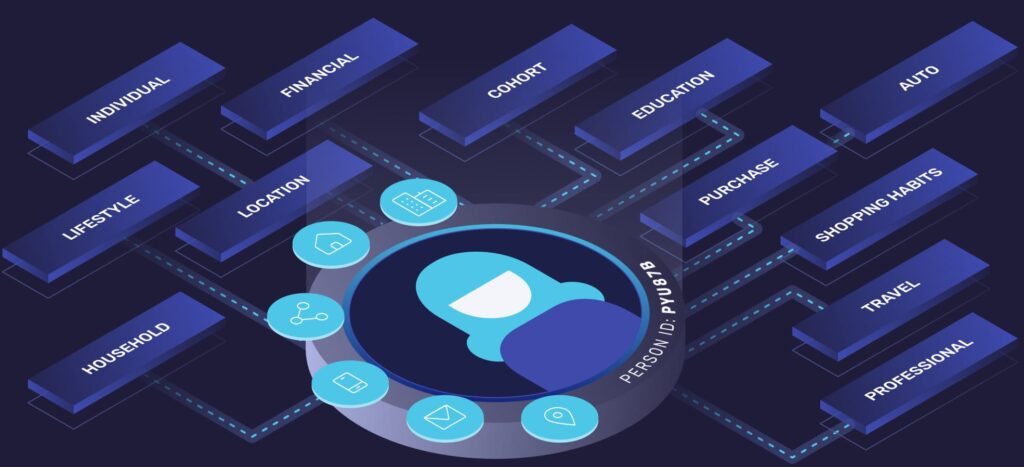
An identity graph connects both online and offline identifiers to build a complete picture of a real person. These identifiers span digital behaviors, device signals, and personal attributes, all mapped to a single individual rather than scattered across disconnected records.
The types of data points an identity graph typically links together include:
- Online identifiers such as email addresses, phone numbers, usernames, and cookies
- Device signals including mobile advertising IDs, IP addresses, and browser fingerprints
- Offline attributes like postal addresses, demographic data, and professional information
- Behavioral signals from web sessions, app interactions, and purchase history
What makes an identity graph powerful is not just the volume of data points it holds, but the relationships it draws between them. When a person visits a website anonymously on a mobile device and later logs in on a desktop, the graph recognizes both touchpoints as belonging to the same individual. That persistent connection is what makes recognition reliable across fragmented digital environments.
How does real-time identity resolution actually work?
Real-time identity resolution works by matching an incoming identifier against a pre-built identity graph and returning a unified customer profile in milliseconds. When a user lands on a website, opens an email, or interacts with an app, their identifier is sent to the resolution engine, which instantly looks up all known connections to that identifier and returns enriched profile data.
The speed of this process depends on how the underlying graph is structured. A well-built identity graph stores pre-computed relationships between identifiers, so the resolution engine does not need to run complex queries from scratch on every request. It simply retrieves existing connections and returns the result. This architecture is what separates true real-time resolution from batch processing approaches that update customer records hours or days later.
The practical outcome is that a brand can recognize a returning visitor, personalize content, and make decisions in the same moment the interaction begins, without any delay that would degrade the customer experience.
What’s the difference between an identity graph and a customer database?
The key difference is that a customer database stores records about customers you already know, while an identity graph maps the relationships between identifiers to recognize individuals even before they identify themselves. A customer database is a structured collection of known data; an identity graph is a dynamic network of connections built to resolve identity in real time.
A customer database holds rows of information tied to a contact record. It answers the question: what do we know about this person? An identity graph answers a different question: is this person someone we already know? It can match an anonymous device signal to an existing customer profile even when no login or form submission has occurred.
This distinction matters because customer databases grow stale and siloed. People change email addresses, switch devices, and interact across channels in ways that a static database cannot track. An identity graph is built to handle that complexity by treating identity as a living network of connections rather than a fixed record.
How FullContact helps with identity graph resolution
We built our Resolve platform around a true identity graph — not a customer database, not a relational database — specifically designed to recognize real individuals in real time. Here is what that means in practice:
- We match authenticated and anonymous identifiers across devices to create a single, persistent customer profile
- Our API delivers identity resolution responses in under 150 milliseconds, enabling genuine real-time decisioning
- We append 900+ personal and professional insights to new and existing customer records without requiring you to share your own data
We have spent over a decade building an identity graph that connects online and offline signals around real individuals, giving brands the foundation they need to move beyond device-level targeting toward genuine people-based recognition. If you want to explore how our identity graph can work for your business, contact us and we will walk you through it.