When personally identifiable information is exposed in a data breach, it enters a shadow economy where bad actors buy, sell, and exploit it to commit identity theft, financial fraud, and targeted scams. The damage is rarely contained to a single moment: exposed personally identifiable information can be misused for months or even years after the initial breach. This article breaks down what qualifies as PII, what happens to it once it is out in the open, and what the real-world consequences look like for businesses.
What types of data are considered personally identifiable information?
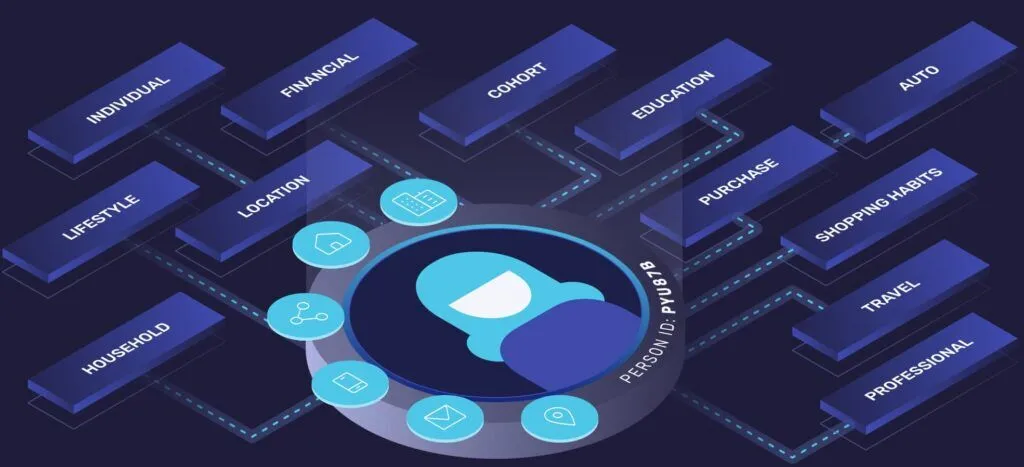
Personally identifiable information, commonly referred to as PII, is any data that can be used on its own or in combination with other information to identify, locate, or contact a specific individual. This includes obvious details like a person’s full name, home address, email address, phone number, Social Security number, and date of birth, as well as less obvious data points that become identifying when combined.
The scope of what counts as personally identifiable information is broader than most people expect. Regulators and privacy frameworks generally group PII into two categories:
- Direct identifiers: Data that identifies a person on its own, such as a passport number, driver’s license number, biometric records, or financial account credentials.
- Indirect identifiers: Data that identifies a person only when combined with other details, such as a ZIP code, employer name, job title, or browsing behavior tied to a device.
Digital interactions have significantly expanded the pool of indirect identifiers. IP addresses, cookie IDs, device fingerprints, and location data can all qualify as PII under frameworks like the GDPR or the California Consumer Privacy Act, depending on how they are collected and used. This means that even data that appears anonymous at first glance can become personally identifiable when layered with other signals.
Health information, financial records, racial or ethnic origin, and political opinions are typically classified as sensitive PII, carrying stricter legal protections because the harm caused by their exposure tends to be more severe and harder to reverse.
What actually happens to PII once it is exposed in a breach?
Once personally identifiable information is exposed in a breach, it typically moves through a predictable and damaging sequence. Stolen data is either used directly by the attacker or sold on dark web marketplaces within hours of the breach. From there, it fuels a range of fraudulent activities that can persist long after the original incident is discovered and contained.
It enters the dark web marketplace
Breached PII is a commodity. Attackers who do not use the data themselves sell it in bulk to other criminals. The value of a stolen record depends on how complete and current it is. A record containing a name, email address, and password is worth considerably less than one that also includes a Social Security number, date of birth, and financial account details. Comprehensive profiles, sometimes called “fullz” in criminal communities, command a premium because they give buyers everything they need to impersonate someone convincingly.
Data can sit on these markets for years. A breach that occurred several years ago may still be generating harm today because the underlying information (a date of birth, a Social Security number) does not change the way a password does.
It enables identity theft and account takeover
With enough personally identifiable information in hand, bad actors can open new credit accounts, apply for loans, file fraudulent tax returns, or take over existing financial accounts. Account takeover attacks are particularly common when a breach includes email addresses and passwords, since a large proportion of people reuse credentials across multiple services. Attackers run automated tools that test stolen login pairs against banking sites, e-commerce platforms, and subscription services at scale.
Victims often do not discover the fraud until they check their credit report, receive a bill for an account they never opened, or are denied credit for reasons they cannot explain. By that point, the damage is already done, and recovery can take considerable time and effort.
It powers phishing and social engineering attacks
Exposed PII also makes targeted deception far more effective. When an attacker knows a person’s name, employer, recent purchases, or even their doctor’s name, they can craft messages that appear completely legitimate. These spear-phishing attacks are significantly more convincing than generic spam because they include real, verifiable details about the target. The recipient is far more likely to click a malicious link or hand over additional credentials when the message feels personal and accurate.
What are the consequences of a PII breach for businesses?
A personally identifiable information breach carries serious and wide-ranging consequences for the businesses responsible for safeguarding that data. The impact falls into three overlapping categories: regulatory and legal liability, direct financial costs, and long-term reputational damage. In many cases, the indirect costs significantly outweigh the immediate ones.
Regulatory penalties and legal exposure
Privacy regulations in most major markets require businesses to protect PII and to notify affected individuals and regulators when a breach occurs. Failure to do so, or evidence that reasonable security measures were not in place, can result in substantial fines. Under GDPR, for example, penalties can reach into the tens of millions of euros or a percentage of global annual turnover, whichever is higher. In the United States, sector-specific rules such as HIPAA for health data and state-level privacy laws add further layers of liability.
Beyond regulatory fines, businesses face the risk of class-action lawsuits from affected individuals. Even where individual harm is difficult to prove, courts in several jurisdictions have allowed breach-related suits to proceed, creating significant legal costs regardless of the outcome.
Financial and operational costs
The immediate financial burden of a breach includes forensic investigation, breach notification, credit monitoring services for affected individuals, public relations support, and the cost of remediating the vulnerability that was exploited. These costs accumulate quickly, particularly for businesses that hold large volumes of customer data.
Operational disruption adds to the financial toll. Breaches often force businesses to take systems offline, redirect engineering and security teams, and delay product development or customer-facing initiatives while the incident is managed. The cost of lost productivity and diverted resources is rarely captured in headline breach figures but is very real.
Reputational damage and customer trust
Trust is difficult to build and easy to lose. When customers learn that their personally identifiable information was exposed because a business failed to protect it adequately, the relationship changes. Research consistently shows that a meaningful proportion of consumers reduce or stop their engagement with a brand following a breach. For businesses that compete on personalization or data-driven services, the loss of customer confidence can have lasting commercial consequences.
Rebuilding trust requires more than a public apology. It demands visible, verifiable changes to data handling practices and a sustained commitment to transparency. Businesses that respond slowly, communicate poorly, or appear to minimize the severity of a breach typically face a steeper and longer recovery.
How FullContact helps protect and manage identity data responsibly
Understanding the risks associated with personally identifiable information is the first step. Putting the right infrastructure in place to manage identity data responsibly is where the real work happens. We built our platform specifically to help businesses recognize and connect customer identities without creating unnecessary data exposure risks.
- Privacy-safe identity resolution: We match customer identifiers across devices and touchpoints in real time without requiring businesses to share or expose their raw customer data.
- Authenticated and anonymous identity linking: Our Identity Graph connects online and offline signals into a single customer profile, reducing the fragmentation that often leads to insecure data handling.
- Real-time API responses: With response times under 150 milliseconds, businesses can verify and enrich identity data at the moment of interaction, reducing the need to store large volumes of raw PII internally.
- 900+ enrichment insights: We append personal and professional data to customer records in a controlled, compliant way, so businesses can personalize without accumulating unnecessary sensitive data.
If your business handles customer data and you want to understand how responsible identity resolution can reduce your exposure while improving the quality of your customer intelligence, we would love to help. Contact us to start the conversation.
Related Articles
- What is the future of personally identifiable information in identity resolution?
- Should businesses enrich customer records using personally identifiable information?
- How does an identity graph work for marketers?
- How do you use sales intelligence for account targeting?
- What is account-based sales intelligence?