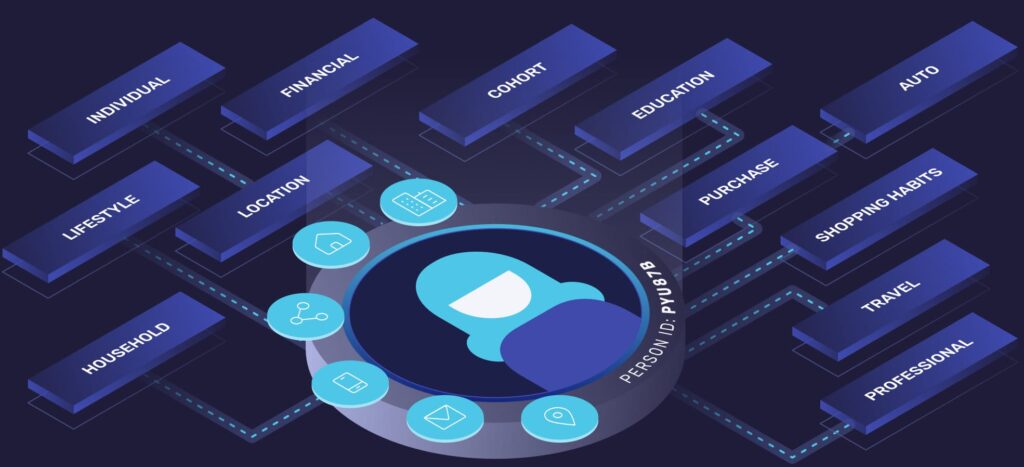
An identity graph builds profiles by pulling together data from a wide range of online and offline sources, then linking those signals to a single, real individual. These sources typically include device identifiers, email addresses, browsing behavior, purchase history, location signals, and third-party data partnerships. The sections below unpack exactly where that data comes from and how it all connects.
What types of data does an identity graph collect?
An identity graph collects both online and offline data signals that can be tied to a real person. Online sources include email addresses, device IDs, IP addresses, cookie data, social profile information, and behavioral signals like browsing and purchase activity. Offline sources add depth through postal addresses, phone numbers, and transaction records from physical interactions.
The power of an identity graph comes from the breadth of these inputs. On the digital side, first-party data collected directly from your website, app, or CRM forms the foundation. This might include a user’s login email, their device fingerprint, or the pages they visited during a session. Third-party data from trusted data partners adds additional attributes, such as professional information, household demographics, or lifestyle interests.
Together, these inputs allow the graph to build a rich, multidimensional profile around a single individual rather than a fragmented collection of anonymous signals.
How does an identity graph link data from different sources?
An identity graph links data from different sources using a process called identity resolution, which matches overlapping identifiers across datasets to determine that multiple records refer to the same person. When two records share a common signal, such as the same email address appearing in both a CRM and a web session log, the graph connects them into a unified profile.
This matching process relies on two core techniques:
- Deterministic matching uses exact, known identifiers like email addresses or phone numbers to make high-confidence connections between records.
- Probabilistic matching uses statistical inference across signals like device type, location patterns, and behavioral data to connect records where no single exact identifier is shared.
Most modern identity graphs use both approaches together. Deterministic links anchor the profile with certainty, while probabilistic signals extend the graph’s reach to cover anonymous or partially identified interactions. The result is a continuously updated, single customer profile that reflects a person’s full journey across touchpoints.
What offline data sources contribute to identity graph profiles?
Offline data sources that contribute to identity graph profiles include postal addresses, phone numbers, in-store purchase records, loyalty program data, and public records such as property or voter registration information. These signals are especially valuable because they capture behaviors and attributes that digital tracking alone cannot observe.
Offline data bridges a critical gap in identity resolution. A customer who browses online but purchases in a physical store leaves two separate trails. Without offline data, those interactions appear to belong to different people. When a loyalty card transaction or a mailing address is matched to an existing digital profile, the graph connects those journeys into one coherent record.
Common offline sources include:
- Retail and point-of-sale transaction records
- Direct mail and postal address databases
- Loyalty and rewards program memberships
- Publicly available records such as property and business registrations
The inclusion of offline data is what separates a true identity graph from a purely digital tracking system. It allows brands to understand the full person, not just their online behavior.
How FullContact helps you build a complete identity graph
We built our Resolve platform to do exactly what a strong identity graph demands: connect fragmented signals from across online and offline sources into a single, accurate, and privacy-safe customer profile. Here is what that looks like in practice:
- Real-time resolution across authenticated and anonymous identifiers, with API responses delivered in under 150 milliseconds
- 900+ personal and professional attributes appended to new and existing customer records for deeper enrichment
- A true identity graph built over a decade, covering both digital and offline data signals without requiring you to share your own data
Whether you are trying to unify your CRM, improve personalization, or close the gap between online and offline customer journeys, we are here to help. Contact us to explore how our identity resolution platform can work for your business.