Authenticated personally identifiable information (PII) is data that a person has voluntarily shared with a business, such as a name, email address, or phone number, while anonymous PII refers to identifiers like device IDs, cookies, or IP addresses that can describe behavior without directly revealing who someone is. The critical difference is consent and traceability: authenticated PII is tied to a known individual, while anonymous PII describes activity that has not yet been linked to a specific person. Understanding how these two types of personally identifiable information interact shapes everything from how businesses personalize experiences to how they stay compliant with privacy regulations.
How is authenticated PII collected differently from anonymous PII?
Authenticated PII is collected through explicit interactions where a person identifies themselves: logging into an account, submitting a form, or completing a purchase. Anonymous PII, by contrast, is gathered passively through technical signals like browser cookies, device fingerprints, or IP addresses, without the individual actively declaring who they are. The collection method reflects the level of consent and transparency involved in each type of data.
When someone creates an account on a website or signs up for a newsletter, they are actively handing over personally identifiable information. This data point, whether it is an email address, a phone number, or a physical address, is authenticated because it can be traced back to a real, consenting individual. Businesses typically collect this through:
- Registration and login forms
- Checkout and purchase flows
- Loyalty program enrollments
- Customer support interactions
Anonymous PII works very differently. It is generated automatically as users interact with digital environments. A visitor browsing a website without logging in still leaves behind a trail of signals: the browser they use, the device they are on, the pages they visit, and how long they spend on each one. These signals are real data points, but they are detached from a confirmed identity. They describe a device or a session, not a verified person.
The distinction in collection method also affects data quality. Authenticated PII tends to be more stable and reliable because the person provided it directly. Anonymous PII can be fragmented, duplicated, or lost entirely when a user clears cookies or switches devices. A single person might generate dozens of anonymous identifiers across different devices and sessions, each appearing as a separate, unconnected signal in a business’s data systems.
Why does the authenticated vs. anonymous distinction matter for privacy compliance?
The distinction between authenticated and anonymous PII matters for privacy compliance because regulations like GDPR, CCPA, and similar frameworks assign different obligations depending on whether data can be directly linked to an identifiable individual. Authenticated PII almost always triggers stricter consent, storage, and deletion requirements, while anonymous PII occupies a more nuanced legal space, one that is increasingly scrutinized as re-identification techniques improve.
Authenticated personally identifiable information is unambiguously in scope for major privacy laws. When a business holds a customer’s name alongside their email address and purchase history, that combination is clearly regulated data. Businesses must obtain proper consent before collecting it, explain how it will be used, and honor requests to access or delete it. Failing to do so carries meaningful legal and reputational risk.
The grey area of anonymous PII
Anonymous PII presents a more complex compliance picture. Many businesses assume that because anonymous identifiers do not include a name or email address, they fall outside the scope of privacy regulations. That assumption is increasingly difficult to defend. Regulators in Europe, for example, have made clear that if data can be re-identified, even indirectly, it may still qualify as personal data under GDPR. A device ID combined with location data and browsing behavior can, in practice, be used to identify a specific person.
Consent frameworks and their implications
The authenticated versus anonymous divide also shapes how businesses structure their consent frameworks. Collecting authenticated PII typically requires explicit, informed consent: a checkbox, a clear privacy notice, and a mechanism for users to withdraw that consent. Anonymous data collection often relies on cookie consent banners and opt-out mechanisms, but the standards here are tightening. Businesses that treat anonymous identifiers as consent-free data are finding themselves increasingly out of step with evolving regulatory expectations. Building a privacy-safe data strategy means treating both types of personally identifiable information with the same level of care and transparency.
How can businesses connect anonymous and authenticated PII into a single profile?
Businesses connect anonymous and authenticated PII into a single profile through a process called identity resolution, matching signals from different sources and sessions to a single, verified individual. The most common trigger is an authentication event: when an anonymous visitor logs in or submits a form, that moment creates a bridge between their previous anonymous activity and their known identity.
Before that authentication moment, a business may have accumulated a rich picture of a visitor’s behavior: pages viewed, products browsed, time spent on specific content. That behavioral data is valuable, but it is floating without a confirmed owner. The moment the visitor authenticates, their known personally identifiable information can be used to anchor all of that prior anonymous activity to a single customer record.
This process is more complex in practice than it sounds. Users interact across multiple devices: a smartphone in the morning, a laptop at work, a tablet in the evening. Each device may generate its own anonymous identifier. Connecting these into a coherent single profile requires more than just capturing a login event. It requires a robust identity graph that can recognize patterns across identifiers, resolve conflicts, and maintain accuracy over time as people change devices, email addresses, and behavior patterns.
The key principles that make this process effective include:
- Capturing authentication events as identity anchors whenever they occur
- Maintaining a persistent, cross-device identity graph rather than siloed device records
- Respecting privacy preferences and consent signals at every stage of the matching process
When done well, connecting anonymous and authenticated PII allows businesses to communicate with customers as whole people rather than as a collection of fragmented device signals. It enables personalization that feels relevant rather than intrusive, and it gives marketers a far more accurate picture of the customer journey from first anonymous touchpoint to loyal relationship.
How FullContact helps businesses resolve authenticated and anonymous PII
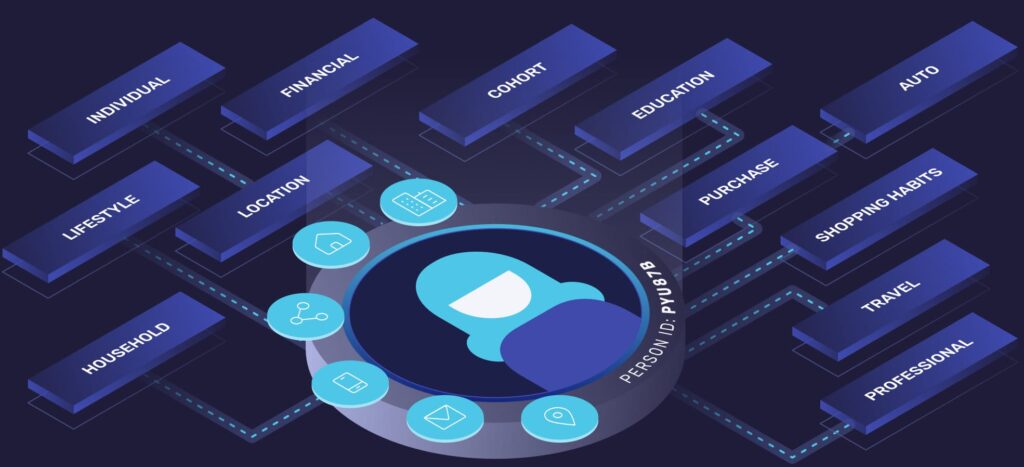
We built our platform specifically to solve the challenge of connecting authenticated and anonymous personally identifiable information into a single, accurate customer profile, in real time and with privacy at the core. Our Resolve platform matches identifiers across devices and sessions, whether a user has authenticated or is still browsing anonymously, to create a unified view of each individual. Here is what that looks like in practice:
- Real-time identity resolution: We deliver API responses in under 150 milliseconds, meaning identity matching happens the moment a user interacts, not hours later in a batch process.
- Cross-device profile unification: Our Identity Graph links authenticated and anonymous identifiers to a single person, not just a device, so fragmented signals become a coherent customer record.
- Privacy-safe by design: We resolve identities without exposing your customer data to third parties, keeping your first-party data secure while enhancing it with 900+ personal and professional insights.
Whether you are trying to personalize experiences for anonymous visitors, unify data across channels, or build a more complete picture of your customers while staying compliant with evolving privacy regulations, we are ready to help. Contact us to learn how identity resolution can work for your business.
Related Articles
- What is the future of personally identifiable information in identity resolution?
- How do you protect personally identifiable information across devices?
- Should businesses store PII or work with anonymized identifiers?
- How does lead identification software support account-based marketing?
- What are the privacy considerations for lead identification software?